

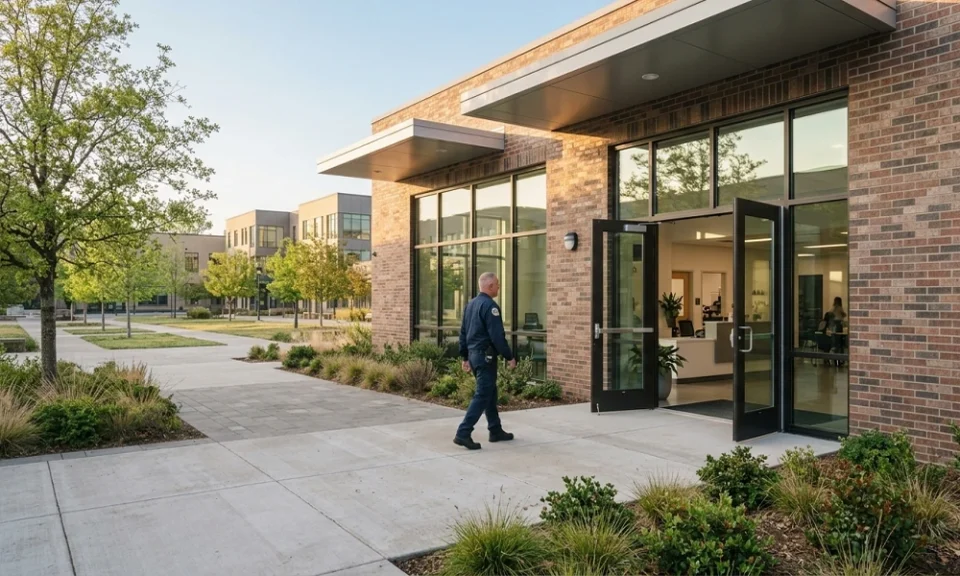
A door upgrade can affect far more than one classroom. It may change morning arrival routes, interrupt nearby lessons, or limit access to an office. For school leaders, the challenge is improving worn entrances while keeping the campus running smoothly.
Successful planning starts before a door is ordered. A clear assessment, realistic schedule, and agreed handover process help facilities teams control the work. The aim is a dependable opening and a predictable experience for the people who use it every day.
Start with the Openings That Need Attention
Peeling paint alone does not explain whether a door needs replacement. Repeated sticking, damaged frames, loose hardware, and unreliable latching deserve closer investigation. Maintenance records can reveal which openings keep generating service calls and which have isolated problems that a repair may resolve.
Commercial Locks and Doors provides commercial door and hardware services for educational facilities, including doors for schools. Its approach includes evaluating the door, frame, hardware, and traffic patterns. That broader view helps shape a scope that addresses the opening as a whole.
A useful survey records each location, its condition, daily use, and known access problems. Photographs and consistent opening numbers make proposals easier to compare. Urgent operational concerns should receive prompt attention; cosmetic improvements can follow a planned sequence.
Set the Scope Before Choosing Dates
A practical school door installation plan identifies what stays and what changes. Reusing an existing frame may reduce work, but only when its condition and compatibility support the proposed assembly. Hidden damage or unsuitable hardware preparation can change the schedule.
Before replacing doors at your school, confirm measurements, swing direction, hardware functions, finishes, and any electrical connections. Assign responsibility for surrounding wall repairs, painting, debris removal, and system integration. These details prevent gaps between trades from becoming delays on campus.
The budget should also account for temporary access arrangements and unexpected conditions. Agree on how changes will be priced and approved, with one school representative available to make timely decisions. An unresolved question should not leave a removed entrance waiting for instructions.
Coordinate Access, Hardware, and Daily Use
Durability matters, but good doors are vital for schools because they also shape how comfortably people move through a building. A busy corridor, a controlled visitor entrance, and a maintenance room may need different combinations of materials and hardware.
The U.S. Access Board’s guidance on accessible doors and entrances addresses clear opening widths, maneuvering space, thresholds, and operable hardware. The project team should review applicable requirements for each affected opening before ordering. Selecting a handle alone does not resolve every accessibility issue.
Coordinate proposed locking functions with campus procedures and the professionals responsible for life safety review. Staff should understand how an upgraded opening operates during normal use and relevant emergency conditions before it enters service.
Build the Schedule Around Campus Activity
School holidays can offer useful work windows, but buildings may still host summer classes, sports, or community programs. Confirm actual occupancy rather than assuming the campus will be empty. Identify testing periods, meal service, deliveries, and arrival times that need protection.
Materials should be received and checked before existing doors are removed. Custom sizes, replacement frames, and specialized hardware can influence readiness. A phased schedule lets the team complete a manageable group of openings before moving to the next area. For a larger school door replacement project, a pilot opening can reveal installation constraints early. The team can then refine labor estimates and sequencing before committing an entire wing to the same approach.
Dust and odors also require planning. The EPA’s school renovation and repair guidance identifies renovation as a potential source of indoor air problems. Agree on work-area separation, ventilation, cleanup, and suitable timing for activities that could affect occupied spaces.
Make Daily Handover Part of the Job
Because schools rely on dependable doors, each phase needs a clear reopening checkpoint. Confirm who checks closing, latching, locking, and any connected access equipment. Record unresolved items and establish whether an opening can return to use before the crew leaves.
Share route changes with reception, teachers, custodians, and other affected staff. Temporary arrangements should preserve required access and exit routes, with the responsible campus team reviewing them in advance. Include after-hours users in these communications.
At completion, collect hardware information, warranty documents, keys or credential details, and maintenance instructions. A brief staff walkthrough can clarify normal operation and how to report faults. Clear records make future servicing easier and support consistent care across the campus.
Visit Commercial Locks and Doors to discuss an upgrade plan suited to the school’s openings, operating schedule, and maintenance priorities.
