

EXCLUSIVE EXPERT CONTRIBUTION / DUBAI, UAE
Expert commentary from SnapFixNow FMC • Engineering-led property maintenance
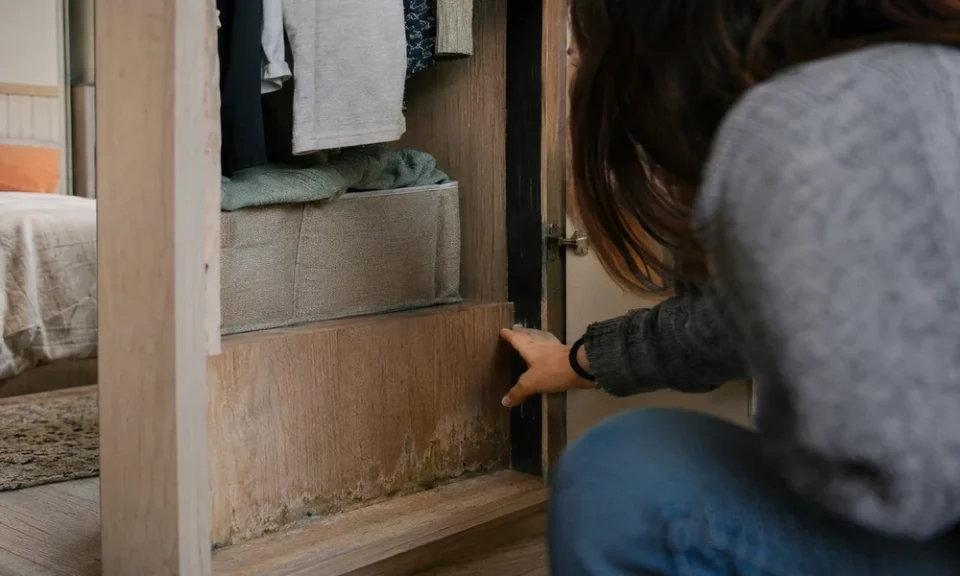
A bedroom can feel comfortably cool while a wardrobe develops a musty smell, the back of a headboard shows marks or the underside of a bed frame begins to deteriorate. The apparent contradiction is that temperature and moisture are not the same thing.
An air conditioner changes the temperature of air and, when operating effectively under suitable conditions, removes some of its moisture. But a cool thermostat reading does not prove that every surface or corner of a room is staying dry.
What happens behind furniture?
Large cabinets pushed tightly against an external wall restrict local air movement. A cool surface, humid indoor air and poor circulation can create conditions where moisture persists. Upholstery, timber products and stored fabrics may then absorb moisture over time.
That does not mean every stain is mould or every musty smell is caused by the AC. Water ingress through the wall, a leaking pipe, a bathroom next door or an intermittent condensate leak can produce similar symptoms. The right response begins with observation and moisture measurement, not a scented cleaning product.
Measure humidity as well as temperature
A small humidity meter helps homeowners understand what is happening over the day. According to the US Environmental Protection Agency, indoor relative humidity should generally remain below 60%, ideally around 30-50% where practical. The appropriate comfort settings for a given building depend on climate, design and occupancy.
Take readings at different times, especially during periods of high outdoor humidity, after showers and when rooms are lightly occupied. A persistent pattern is more meaningful than a single reading taken beside an AC supply grille.
If one wall or piece of furniture repeatedly shows moisture, document the location and investigate nearby plumbing, façade joints and cooling components. Do not assume changing the thermostat by one degree will solve a hidden leak.
Understand the role of the cooling system
An AC filter blocked by dust can impair airflow. A fouled coil, improperly operating fan or defective condensate system can affect system performance and drainage. Poorly insulated chilled surfaces may develop unwanted condensation. Controls and equipment sizing also influence how a home behaves at part load. A targeted HVAC system inspection can examine the connected causes of inadequate moisture removal rather than focusing only on room temperature.
The professional inspection should therefore consider airflow, coils, filters, drains, insulation and control operation as a connected system. Simply washing a grille or adding refrigerant without diagnosing the issue is not a complete answer.
Make design choices that support drying
Leave sensible clearance where furniture backs onto damp-prone walls. Ensure bathrooms and kitchens have adequate moisture extraction. Avoid storing textiles directly against surfaces that are repeatedly wet. Watch for leaks around windows, fan-coil access panels and ceiling voids.
When a room has already suffered water damage, cleaning the visible finish is only part of the remedy. The source must be controlled and affected materials assessed. The EPA warns against enclosing or painting over materials that remain wet. For substantial recurring damage, a documented cause-and-condition assessment may assist property-damage technical documentation before reinstatement.
There is also an aesthetic consequence: veneer lifting, swollen MDF, softened adhesives and damaged fabrics may be expensive to replace even when the structural building remains sound. Protecting interiors begins with managing the building environment in which they sit.
When to involve a professional
If moisture persists despite ordinary ventilation and cleaning, or if staining spreads, request a qualified inspection. Share photographs, readings and the time pattern. Where mould is extensive or occupants have particular health concerns, seek appropriately qualified remediation or health advice rather than attempting indiscriminate chemical treatment.
A beautiful room depends on invisible systems working well. Temperature is what occupants feel first; moisture control is what preserves the room long after installation day.
The three-reading bedroom test
For several days, log room temperature, relative humidity and time of day rather than relying on a single thermostat reading. Note whether the windows were open, the bathroom was used, air conditioning was operating and furniture was placed tightly against a wall. A basic hygrometer can help reveal a sustained pattern, although it will not diagnose the source. The US EPA recommends keeping indoor relative humidity below 60%, ideally around 30-50%, as general moisture-control guidance; comfort and equipment design still need a site-specific assessment.
Do not treat every dark mark as a cooling fault
A wardrobe backing may deteriorate because humid indoor air reaches a cold external wall, but a concealed plumbing leak, façade ingress, leaking condensate line or wet wall cavity can produce similar symptoms. Signs concentrated near an adjacent bathroom or following rainfall should widen the investigation. Smell alone cannot identify mould type or source. If water-damaged materials or suspected microbial growth are extensive, arrange appropriate professional assessment instead of scraping or painting over them.
A practical interiors-and-engineering plan
Move furniture slightly away from affected surfaces where practicable, maintain ventilation appropriate to the building design, address obvious leaks promptly and avoid sealing visibly wet materials. Ask an HVAC professional to evaluate airflow, coil condition, drain integrity, controls and humidity performance, especially where short cycling or uneven room temperatures are reported. Avoid excessive cooling as a substitute for moisture control: lowering the thermostat can create colder surfaces without resolving infiltration or drainage defects.
Quick answers for Dubai property owners
Can mould develop if the bedroom AC is running?
Yes. Cooling does not guarantee moisture control everywhere, particularly behind furniture or near concealed leaks.
Is 50% relative humidity a legal limit in Dubai bedrooms?
No. The cited EPA range is general moisture-control guidance, not a statement of a Dubai residential legal threshold.
Will moving a wardrobe solve the problem?
It may improve local airflow but will not repair a leak, defective insulation or inadequate humidity management.
About the expert
SnapFixNow FMC provides engineering-led building maintenance, HVAC services and asset-based preventive maintenance for properties in Dubai and the Northern Emirates. For a technical overview, see air-conditioning inspection and maintenance: https://www.snapfixnow.com/hvac/.
