

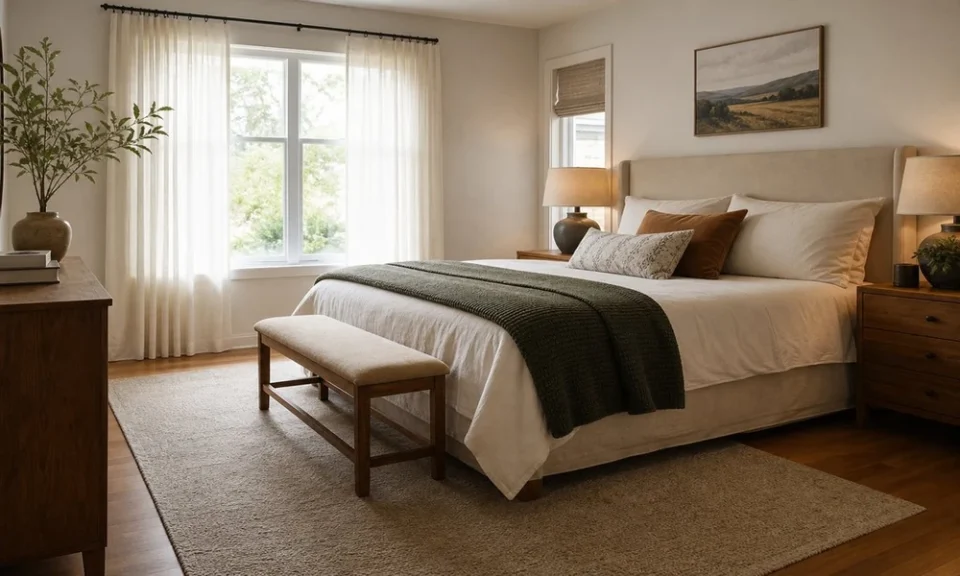
Bedroom furniture and layout
Wondering why your bedroom feels cramped? While everything looked fine separately in the furniture showroom, bringing all of your favorite bedroom pieces together might not be as practical as you initially thought. Instead of planning your bedroom furniture decisions individually, take time to envision all of the different functions and activities that will take place in the room and group them into functional areas:
- Sleeping
- Storage for clothes and accessories
- Bedside items you may need while in bed at night
- Door and passageway access
Whether you’re furnishing a new home or comparing bedroom furniture near Grand Rapids, planning your layout before making a purchase can help you choose pieces that fit both your space and daily routine. Once you’ve taken into consideration all of the different functional areas in your bedroom, you’ll be ready to begin planning where furniture should go based on storage and everyday accessibility.
Decide What Storage Stays Before Adding More
Before shopping for new bedroom storage furniture, assess the storage you already own to determine if there are any pieces you’d like to incorporate into your new bedroom layout. Keeping some existing storage can help you decide how much additional bedroom storage you need to buy, while replacing other pieces may help you overcome some layout obstacles. That also gives you a baseline as you compare bedroom furniture against what you already own. For each piece, ask yourself:
- Do I regularly use the storage?
- Will it fit in my room layout without getting in the way of a door or passageway?
- Do I like using the drawers and doors, and do all of the storage compartments and surfaces function well?
- How does the piece’s height relate to other pieces of furniture, especially the bed?
- Is the piece safe where it would go (can it be properly anchored if necessary)?
For instance, a dresser that’s too deep may not be as useful as a shallower one with easy access to drawers. Or, that cute little storage trunk or bench may not be worth the lost circulation space if it ends up being a catchall for clothes instead of a useful part of your daily bedroom routine.
Measure the Complete Bed and Its Support
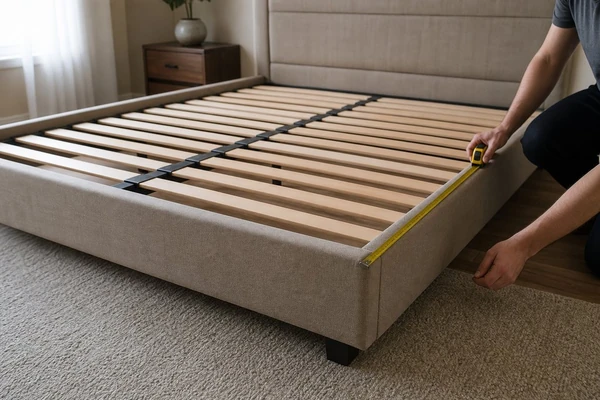
Bed dimensions
When measuring your bed’s footprint, don’t just stop with the mattress dimensions! If your bed frame has any sort of headboard or footboard, side rails, corner posts, or decorative trim that sticks out beyond the mattress size, you’ll want to factor those in to get an accurate width, length, and height of your total bed setup.
You’ll also want to think about mattress support. Does your bed frame work best with a foundation, platform, slats, center support, etc.? Review the specifications for mattress support, slat spacing, weight capacity, and assembly instructions that came with your mattress and bed frame to make sure you’re using the best mattress support option for both. Not only could a mattress that’s too high for your setup make it awkward to access things on your nightstand or bedside table, but your mattress may not last as long or perform as comfortably without the proper support.
Plan on having at least a 30″ passageway around your bed to get in and out, but this can vary depending on your doors, closet access, and nearby furniture with doors or drawers.
Test Furniture at Full Extension
- That cute little chest you love may end up clogging your only passageway to get out of the bedroom.
- That dresser you thought would look cute across from your bed might actually block access to the other side of the bed when a drawer is open.
- How you’ll get from the door to your bed
- Access to your closet and/or bathroom
- How you’ll move around the bed to make it
- How much space you’ll need to access drawers
- How you’ll maneuver with laundry, bedding, or a suitcase
Compare Usable Storage and Set Contents
- Dresser, typically best for day to day folded clothes
- Chest, can help utilize wall space more efficiently if you need additional storage but are running out of wall space
- Under the bed drawers, can be helpful for sheets, blankets, and off-season clothes
Verify the Delivery Route and Anchor Tall Pieces
Before purchasing bedroom furniture in the Grand Rapids area, always think about how you’ll get beds, dressers, chests, and other case goods into your bedroom. Lastly, when shopping for case goods (beds, dressers, chests, etc), always think about how you’ll get the items into your bedroom! This isn’t just about measuring your bedroom door, measure your entry door, hallways, corners, elevators, stairs, etc and compare against both the assembled and packaged dimensions of the product (these dimensions can usually be found in the product specifications on our website).
Headboards, side rails, mirrors, and assembled case goods can be challenging to maneuver through tight corners or around tricky obstacles. Take note of whether case goods pieces will be packaged together or separately to envision how you’ll unpack and set up the pieces once they’re in your home.
Lastly, while assembling case goods, always follow manufacturer directions, including rechecking hardware and anchoring dressers/chests or other tall storage pieces to the wall according to the tip-over prevention guidance discussed at cnn.com/2021/10/13/health/furniture-tip-over-injuries-wellness/index.html, especially if children will be using the bedroom. This will help keep furniture stable when doors and drawers are open or if little ones try climbing, pulling, or hanging on furniture.
