

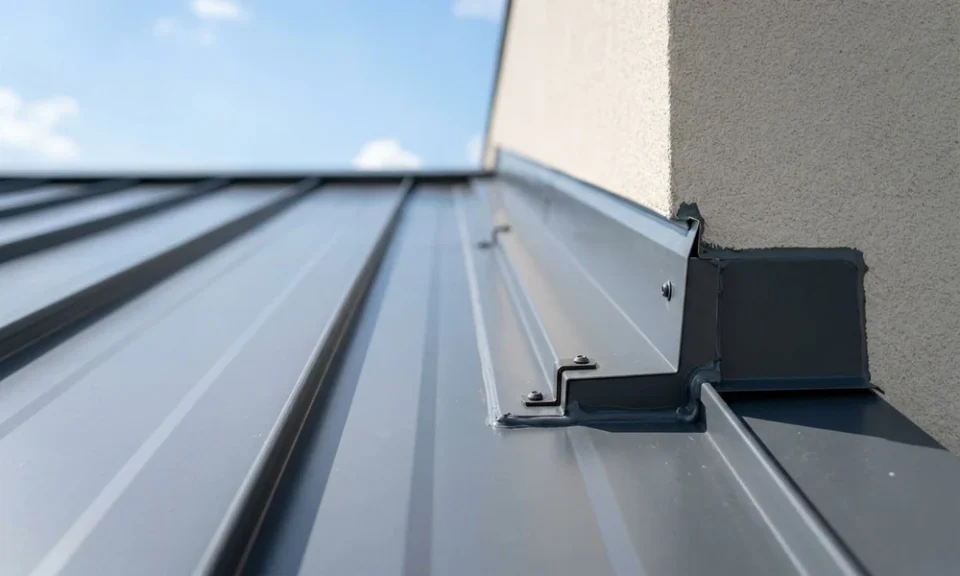
Most homeowners judge siding by what they can see from the street, like color, texture, or a cracked board by the garage. But siding rarely fails in the middle of a wall. It fails at the edges: where a roof slope runs into a sidewall, where a gutter stops a few inches short of a corner, or where the bottom row of boards sits right on top of mulch and red clay. Water collects at these transition points. In a climate that moves from summer downpours to weeks of sticky humidity to the occasional hard freeze, that water finds every shortcut.
North Georgia makes this worse in a few specific ways. Many homes around Lake Lanier and along the GA 400 corridor went up quickly during the building boom. A lot of them have busy rooflines with dormers, stacked gables, and garage roofs that meet two-story walls. At each of those junctions, the roofing crew and the siding crew have to hand the job off to each other. When they are separate companies working on separate schedules, details get skipped. As a result, a siding problem is often a roofing problem in disguise, and the reverse is true too.
This is why it pays to have one team handle the roof, the gutters, and the walls. Edge Roofing is a family-owned company based in Dahlonega. It works as a Forsyth County siding contractor while also holding Owens Corning Platinum Preferred and James Hardie Alliance Select credentials, so flashing, drip edge, and siding details get planned together instead of patched together later. The team installs Hardie lap siding, board and batten, shakes, trim, and soffit in HOA-friendly colors. They pair that with 6-inch seamless gutters and gutter guards, and can add windows, doors, painting, or a new deck if the exterior needs more than new cladding. Free inspections and Regions financing make it easier to take care of the whole exterior at once.
A Few Inches of Metal That Cause Most of the Damage
If you walk around enough water-damaged homes in this region, you’ll see the same culprit again and again: a missing kickout flashing. This is a small angled piece of metal at the bottom of a roof-to-wall joint. Its job is to push water away from the wall and into the gutter. Without it, all the water running down the step flashing dumps straight behind the siding and onto the wall sheathing.
The residential building code has required a diverter at these spots for years. Even so, kickouts are regularly left off, bent flat by gutter installers, or buried under a gutter end cap. Damage builds up quietly. The first signs are usually dark streaks under the corner of a lower roof, trim that looks swollen, paint bubbling in one spot, or a musty smell in the room below. By the time a board feels soft, the plywood behind it has often been wet for years.
Clearances That Installers Skip
Fiber cement and engineered wood manufacturers publish specific gaps their products need. These numbers aren’t just suggestions. Ignoring them is one of the fastest ways to void a siding warranty. The figures below are common guidelines, and the current installation guide for your product always takes priority.
| Location | Typical clearance | Why it matters |
|---|---|---|
| Finished grade (soil or mulch) | About 6 inches | Stops clay splashback, wicking, and hidden termite entry |
| Roof surfaces along a sidewall | About 2 inches | Keeps cut board ends out of runoff and lets flashing drain |
| Decks, patios, and walkways | 1 to 2 inches | Keeps boards out of standing water |
| Butt joints between planks | Flashing strip behind the joint | Keeps rain out of the seams |
Cut ends matter too. Fiber cement boards should have every field cut sealed or primed. An unsealed board end sitting 1 inch above a shingle can soak up water every time it rains.
Picking a Material for Heat, Humidity, and Pollen
Nearly every material can work here if it’s installed correctly. Each one reacts differently to the local climate, though.
- Fiber cement is the most common upgrade in the area for good reason. James Hardie sells a line formulated for hot, humid climate zones, and its factory-finished boards hold their color much longer than site-painted wood. The tradeoffs are weight, higher labor costs, and the need for crews who know how to handle silica dust properly.
- Vinyl is still the budget option, and modern profiles look better than older ones. However, vinyl can warp from sunlight reflected off a neighbor’s energy-efficient windows. Dark vinyl colors also need heat-rated formulas to avoid distorting in July.
- Engineered wood like LP SmartSide is lighter, comes in long boards with fewer seams, and holds up well to hail. It needs regular repainting, and its edges need the same careful clearances as fiber cement.
- Natural cedar looks beautiful but has a hard time with humidity, carpenter bees, and mildew unless it’s stained regularly.
Two local issues are easy to overlook. First, the thick yellow pine pollen every spring and the constant shade on north-facing walls lead to algae and mildew. Textured finishes in mid-tones hide both better than smooth white or very dark boards. Second, the popular mix of vertical board and batten on gables with horizontal lap siding on the main walls adds more transitions, and each one needs its own flashing.
The industry is moving toward complete exterior systems. James Hardie’s purchase of AZEK, the parent company of TimberTech decking, points to a future where siding, trim, and decking come as coordinated packages. That makes it even more valuable to have one installer who understands how every piece fits together.
After the Hail Passes
Spring storms in north Georgia bring hail and straight-line winds that damage the roof and walls at the same time. Insurance adjusters often inspect both, but homeowners usually only report the roof. After any serious storm, walk around the house and look for chips on the sides facing the wind, cracked corner trim, and dents in gutters and downspouts. Take dated photos. If your siding has been discontinued, ask your insurer how your policy handles color matching, because policy wording varies a lot.
A Ten-Minute Walk Around
You can catch most early warning signs without a ladder:
- Look for streaks or stains under any spot where a lower roof meets a wall.
- Check whether gutters overflow onto the siding during heavy rain.
- See if the bottom row of siding touches soil, mulch, or pavers.
- Check for cracked caulk where window and door trim meets the siding.
- Look for pencil-thin mud tubes on the foundation, which signal termites.
- Press a screwdriver into the trim near the ground and around the garage door frame. Soft wood means moisture is getting in.
Timing matters as well. If you’re planning to replace both the roof and the siding within a few years, doing them together lets the crew install the flashing properly between them. Otherwise, the second crew has to pull back boards the first crew already finished. Fall is a good time to do the work in this region, because lower humidity helps paint and sealants cure properly.
