

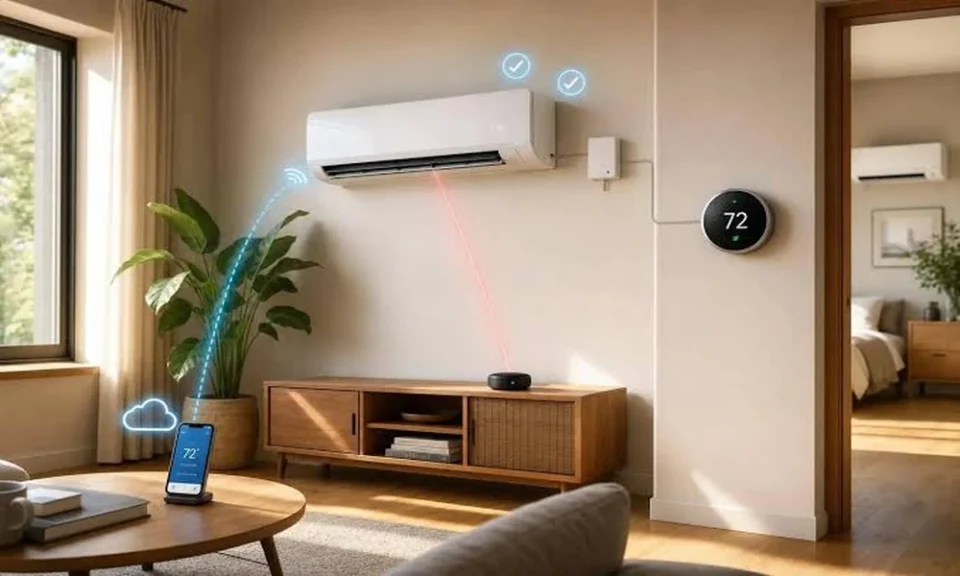
Plenty of homes in Garden City have grown in odd directions over the years. A 1960s ranch near the river picks up a sunroom in the eighties. A detached garage off Chinden turns into a pottery studio. A backyard shed becomes a home office with a space heater humming under the desk. The original furnace was never asked to reach any of these spaces, and in most cases it simply can’t.
Extending ductwork into an addition or out to a garage is often awkward, sometimes impossible and rarely cheap. That’s where ductless mini-splits have earned their reputation. They heat and cool one space at a time, run on electricity and ask for little more than a small hole in an exterior wall.
Getting one right still takes a careful look at the room, the wall and the electrical panel, which is the kind of job worth handing to an experienced hvac company in Garden City rather than a box store kit. Everything Air works on ductless setups and heat pumps alongside furnaces and central air, and the family-owned Meridian shop has spent more than twenty years on Treasure Valley homes, with technicians available any hour when something stops working.
How One Small Line Set Does the Work of a Duct Run
A mini-split has two main parts. An outdoor unit holds the compressor, and one or more indoor heads mount high on a wall or tucked into the ceiling. A bundle of refrigerant lines, a power cable and a condensate drain connect them through an opening roughly three inches across.
The indoor head moves heat rather than burning fuel. In summer it pulls heat out of the room and dumps it outside. In winter the process reverses and it gathers heat from outdoor air, even cold air, and releases it indoors. Modern units use inverter compressors that ramp up and down instead of switching fully on and off. That steady output keeps temperatures even and avoids the blast-then-chill cycle of an undersized window unit or a wall heater.
Each head has its own controls, so the studio can sit at 66 degrees while the sunroom holds 72. No air travels through a duct, which means none of it gets lost in a hot attic or a cold crawlspace along the way.
Spaces the Original Ducts Forgot
Some rooms are natural fits for ductless and some only look like they are. The details of each space change the answer.
The garage turned workshop or gym. Garages are usually poorly sealed and lightly insulated, with a big door that leaks air at every edge. A mini-split can make one comfortable, but it should be sized for those losses. Adding weatherstripping to the overhead door and insulating the walls first often lets a smaller, cheaper unit do the job.
The sunroom or porch enclosure. Glass on three sides means huge solar gain on August afternoons and fast heat loss on January nights. These rooms swing harder than anything else in the house. A head sized with the window area in mind keeps the space usable year round instead of only in April and October.
The bonus room or finished attic. Rooms tucked under the roof sit at the very end of the duct system, and they bake. A ductless head lets the upstairs run on its own schedule without overcooling the bedrooms below.
The backyard studio or accessory unit. Detached spaces are where ductless shines brightest. There is no way to run ducts across a yard, and a single small system handles both heating and cooling without a gas line.
The older home still on baseboard or wall heaters. Some Garden City houses, especially smaller ones and older rentals, were built with electric resistance heat and no ducts at all. Swapping those heaters for a heat pump can cut heating costs considerably, since moving heat takes much less electricity than making it.
Questions That Separate a Good Install From a Noisy One
A mini-split is only as good as the planning behind it. Before any holes go through the siding, it pays to ask the installer a few pointed things.
- How was the capacity chosen? A head that’s too big for a small room short cycles, wastes power and does a poor job removing moisture.
- Single zone or multi-zone? One outdoor unit can feed several heads, but small heads on a large outdoor unit can struggle at low demand.
- Where will the indoor head go? It needs clear airflow across the room and a spot away from beds, desks and direct sun on the thermostat sensor.
- How will condensate drain? Gravity lines are simplest, but some placements need a small pump that has to be maintained.
- Is the panel ready? Most units need a dedicated 240 volt circuit, and older panels sometimes need work first.
- How will the outdoor unit sit through winter? It should rest on a stand or bracket above snow and away from the roof drip line, since defrost cycles produce meltwater that can freeze into a block of ice underneath.
Also ask how the line set will run outside. A painted cover channel looks tidy and protects the insulation on the copper from sun damage.
Treasure Valley Winters and the Cold Weather Question
People still assume heat pumps quit when the temperature drops. Older models did lose steam in deep cold, but current cold-climate units keep putting out useful heat well below zero. Garden City rarely sees those extremes. Most winter nights land in the twenties, with occasional colder snaps when an inversion settles over the valley.
During those stretches the outdoor unit will pause now and then to defrost its coil. That’s normal. A puff of steam rising from the unit on a frosty morning is part of the routine and not a sign of trouble.
For rooms that matter most on the coldest nights, some owners keep a small backup heat source. In a well-insulated space with a properly sized cold-climate model, though, the mini-split usually handles winter alone.
What It Costs and Where Help Comes From
Price depends on capacity, the number of zones, line set length and how much electrical work is needed. A single head serving one room costs far less than a three-zone system feeding a whole upstairs.
Idaho Power runs an incentive for ductless heat pumps in existing homes currently heated with electric baseboard, ceiling cable or wall units. The work has to be done by a participating contractor, and the terms change from time to time, so confirm eligibility before buying equipment.
Upkeep is light but real. The washable filters in each head need rinsing every month or so during heavy use. A yearly professional cleaning of the coil and blower wheel keeps mold and dust from building up inside the head, which matters more than many owners realize.
When the Better Answer Is Something Else
Ductless is not a cure for every uneven room. If the back bedroom is cold because a duct came loose in the crawlspace or the return is blocked, fixing the existing system costs less and solves the real problem. A whole house with good ducts and an aging furnace is usually better served by a ducted heat pump or a new furnace than by a head on every wall.
The strongest case for a mini-split is a space the central system was never designed to serve. Garden City has plenty of those, tucked behind houses, over garages and inside rooms that were added long after the furnace went in. Matching the right equipment to each of them is how a whole property finally starts to feel comfortable from one end to the other.
